
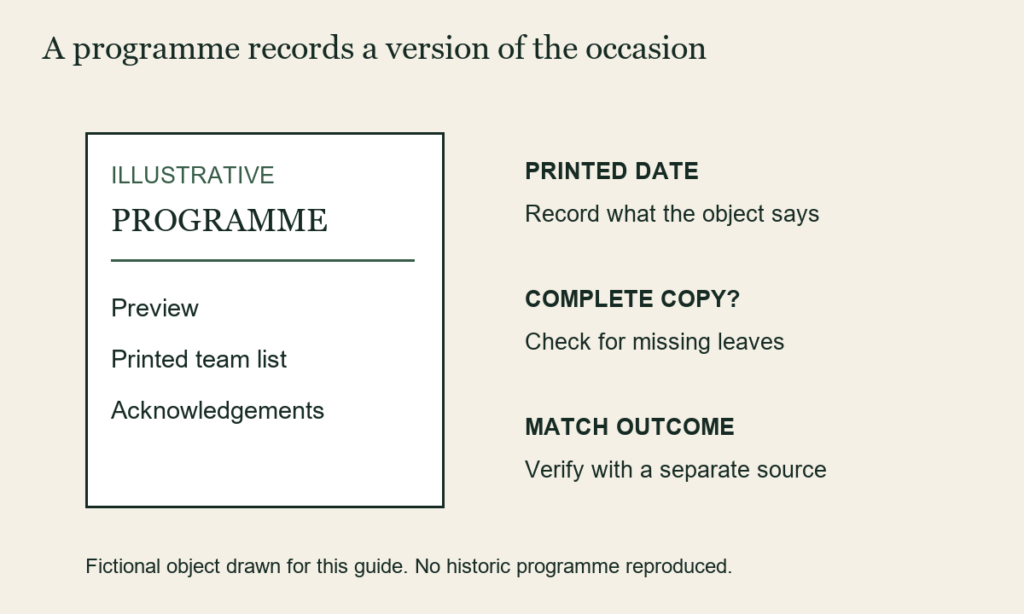
A programme records more than a fixture. Its advertisements, acknowledgements, page order and printing choices can show how a football occasion presented itself to its community. It remains a publication produced for a purpose, rather than a complete account of everything that happened.
When describing a programme, begin with the date printed on it, the named teams, the competition and its physical condition. Record whether you have the whole copy. A missing middle sheet can remove a team list or change the apparent sequence of an article.
Leave room for the match to have changed
A printed line-up is not necessarily the team that took the field. A preview was written before the final whistle. Treat each item according to when and why it was created. If you add a result from another source, identify that source separately rather than silently writing it into the programme’s own evidence.
For a personal catalogue, a few consistent fields are enough: date, fixture, publisher, page count, condition and where the copy came from. Do not publish another person’s address if it appears in a handwritten note. Nor does owning a paper copy automatically grant permission to reproduce all its photographs or articles online. The UK copyright overview explains that original writing, photography and published layouts can be protected. Check the rights for the material you want to use.
The interesting detail might be a notice thanking a volunteer or an advertisement for a vanished shop. Describe it carefully, then ask what further evidence would help explain it. Local sporting history grows stronger when the small surviving object is allowed to remain specific.