
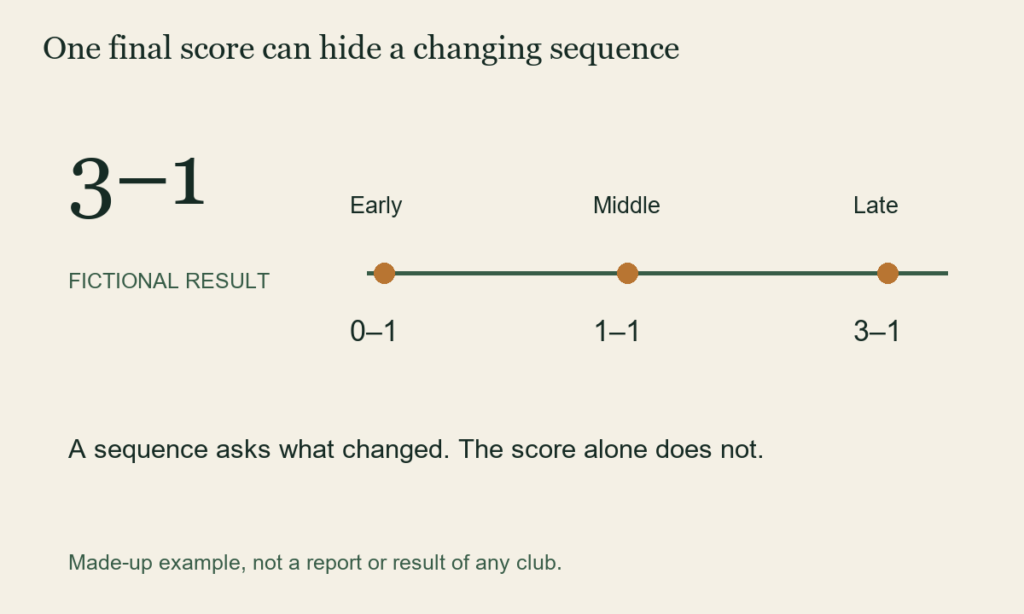
“They won comfortably” can sound plausible beside a wide scoreline. Yet the result alone does not tell us when the goals arrived, how chances were created or whether a late spell changed the margin. A short match account needs a sequence, not just an adjective.
If you are recording a game, separate confirmed events from impressions. Note the time approximately when precision is unavailable. Identify a scorer only when you have reliable confirmation; do not convert a distant view into certainty. If an official correction later appears, update the record visibly.
An economical structure is: the early pattern, the event that changed it, and what followed. That gives a reader something to understand beyond the final numbers. Avoid inventing quotations, dressing-room reactions or a manager’s intention to make the account sound complete.
This publication’s launch essays do not claim to report matches attended by a correspondent. The distinction matters. A guide to watching football can be useful on its own terms; a report of a particular match requires evidence of that match.